NCERT Solutions for class 12 Maths | Chapter 13 - Probability
Questions
1
If the event A and B are independent, then P(A∩B) is equal to
Answer:P(a). P(b)
⭐ Make GKSeries Your Preferred Source on Google
Add GKSeries as Preferred Source
3
If A and B are such that events that P(a) > 0 and P(b) ≠ 1, then P (A’|B’) equal
A
1 – P (A|B)
B
1 – P(A’|B)
C

D
p(A’) | P(B’)
Answer:
4
You are given that A and B are two events such that P(b) = 3/5, P(A|B) = 1/2 and P (A∪B) = then P(B|A’) equals
Answer:3/5
5
If A and B are two events and A ≠ Φ, B ≠ Φ, then
A
P (A|B) = P (a). P (b)
B
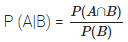
C
P (A + B). P (B|A) = 1
D
P (A|B) = P (a) | P (b)
Answer:
7
If A, B are two events associated with same random experiment such that P(a) = 0.4, P(b) = 0.8 and P(B/A) = 0.6 then P(A/B) is
Answer:0.3
8
Two dice are tossed once. The probability of getting an even number at the first dice ora total of 8 is
Answer:5/9
9
If P(b) = 1/5, P(A|B) = 1/2 and P(A∪B) = 4/5 then P (A∪B)’ + P (A’∪B) =
Answer:3/5
10
A and B are events such that P(a) = 0.4, P(b) = 0.3 and P(A∪B) = 0.5. Then P(B∩A) equals
Answer:1/5
12
An experiment has 10 equally likely outcomes. Let A and B be two non-empty events of the experiment. A consists 4 outcomes, the number of outcomes that B must have so that A and B are independent is
Answer:5 or 10
13
You are given that A and B are two events such that P(b) = 3/5, P(A|B) = 1/2 and P (A∪B) = 4/5, then P(a) equals
Answer:1/2
14
A pair of dice are rolled. The probability of obtaining an even prime number on each dice is
Answer:1/36
15
The probability that A speaks truth is 4/5 while this probability for B is 3/4. The probability that they contradict each others when asked to speak ana fact is
Answer:4/5
16
If P(a) = 2/5, P(b) = 3/10 and P (A∩B) = 1/5, then P (A’|B’). P(B’|A’) is equal to
Answer:25/42
17
If A and B are two independent events with P(a) = 3/5 and P (b) = 4/9, then P (A’∩B’) equals
Answer:2/9
18
Let P (a) = 7/13, P(b) = 9/13 and P (A∪B) = 9/13, Then P(A’|B) is equal to
Answer:5/9
19
If A and B are any two events such that P(a) + P(b) – P(A∩B) = P(a) then
A

B

C

D

Answer:
 1 then


Chapters