UPSC Notes

Merits of Direct Seeding and Planting

Relative Merits of Direct Seeding and Planting – Advantages, Disadvantages & Comparison

Relative Merits of Direct Seeding and Planting Establishing a healthy forest begins with choosing the right regeneration method. In forestry, artificial regeneration is commonly achieved through direct seeding or planting. Although both methods aim to establish tree cover, they differ significantly in terms of cost, labour, survival rate, and long-term performance. Understanding the strengths and […]

Relative Merits of Direct Seeding and Planting – Advantages, Disadvantages & Comparison Read More »

Anthropogenic Causes of Forest Destruction

Anthropogenic Causes of Forest Destruction: Definition, Examples, Effects & Prevention (2026 Guide Free)

Anthropogenic Causes of Forest Destruction Forests are among the Earth’s most valuable natural resources, providing habitat for wildlife, regulating climate, conserving biodiversity, and supporting millions of people’s livelihoods. However, rapid human development has led to widespread forest destruction across the globe. The anthropogenic causes of forest destruction refer to human-induced activities that result in the

Anthropogenic Causes of Forest Destruction: Definition, Examples, Effects & Prevention (2026 Guide Free) Read More »

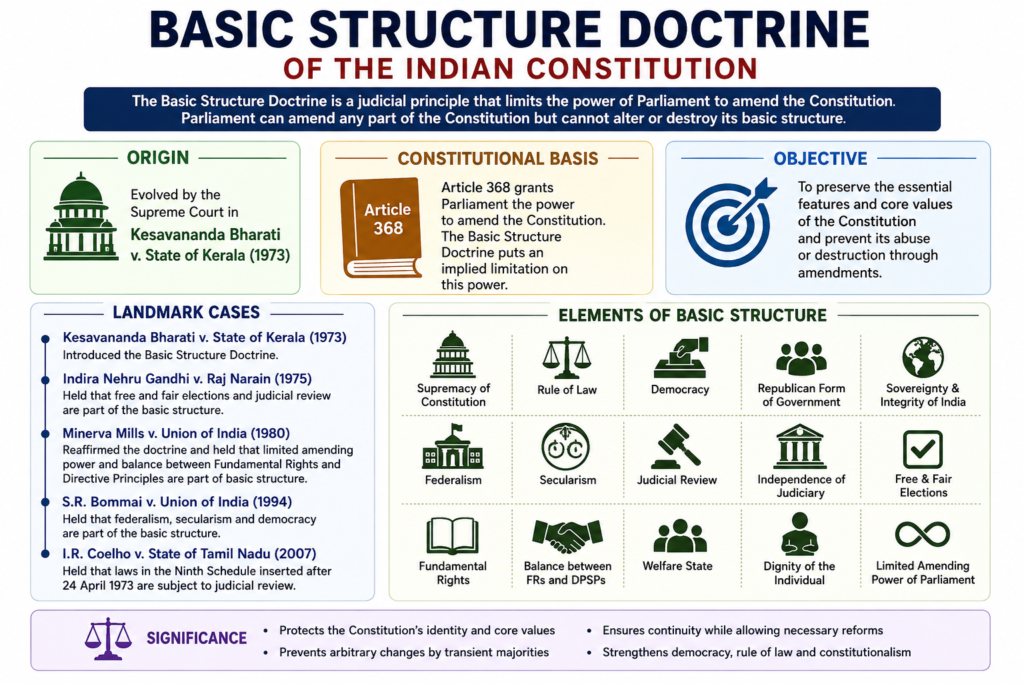
Basic Structure Doctrine of the Indian Constitution

Basic Structure Doctrine of the Indian Constitution: Meaning, Origin, Features, Cases, and Importance for UPSC

Basic Structure Doctrine of the Indian Constitution The Basic Structure Doctrine is one of the most significant judicial principles in Indian constitutional law. It ensures that while Parliament has the power to amend the Constitution under Article 368, it cannot alter or destroy its fundamental framework. The doctrine was established by the Supreme Court in

Basic Structure Doctrine of the Indian Constitution: Meaning, Origin, Features, Cases, and Importance for UPSC Read More »

Geography Notes

Consequences of Migration

The consequences of international migration vary greatly depending on the destination country, its political and social environment, its cultural values and moral standards. Some destinations prefer immigrants to people born in a country with a distinct ethnic identity. But most destinations want immigrants to assimilate into local communities with distinct cultural affiliations. 1. Economic Consequences

Consequences of Migration Read More »

Geography Notes

Causes of Migration

Migration, as defined by the United Nations, is a phenomenon that involves the movement of people from one country to another for various reasons. Needs to migrate are mainly related to better employment opportunities, access to healthcare, better education and climate change. Migrant population refers to the population that moves from their original residency into

Causes of Migration Read More »

Geography Notes

Streams of Migration

Internal migration (within the country) Internal migration may be a long-term trend, but it is difficult to measure. There has been an increase in internal migration due to the decentralization of economic activities, which has provided employment opportunities in the secondary and tertiary sectors of many developing countries, including rural areas. As rural populations grow

Streams of Migration Read More »

Geography Notes

Migration in India

Migration is a phenomenon that has been taking place in India since ancient times. Migration refers to a situation where a person leaves his/her place of residence and goes elsewhere to improve his/her socioeconomic status by finding more suitable employment opportunities, better education, more earnings and so it. Migration can also take into account movement

Migration in India Read More »

Geography Notes

What is the work participation rate?

Work participation rate plays an important role to appreciate the employment situation of a region or country. It has been defined as the percentage of employed labor force in relation to the total labor force. Work participation rate is an important area of discussion for economists, government officials, demographers and other professionals who are interested

What is the work participation rate? Read More »

Geography Notes

Population Composition – India, People And Economy

Rural — Urban Composition 72 percent of the total population lives in villages. With reference to rural-urban migration, national policy on population and economic development as well as on health and family welfare of Government of India, stipulate for balanced regional distribution, more particularly the replacement of net out-migration by net in-migration of population. Linguistic

Population Composition – India, People And Economy Read More »

Scroll to Top